In recent years, AI has become increasingly prevalent in our daily lives, but the cost of having such large-scale and complex systems ready at our fingertips is not as obvious. Behind your favorite (or least favorite) AI chatbot is a data center that makes its existence possible. Data centers house the computer chips that train and utilize machine learning models as well as an immense amount of infrastructure that ensures these models can deliver output to users as quickly as possible. To power all these systems, AI data centers require a large and ever-increasing amount of electricity.
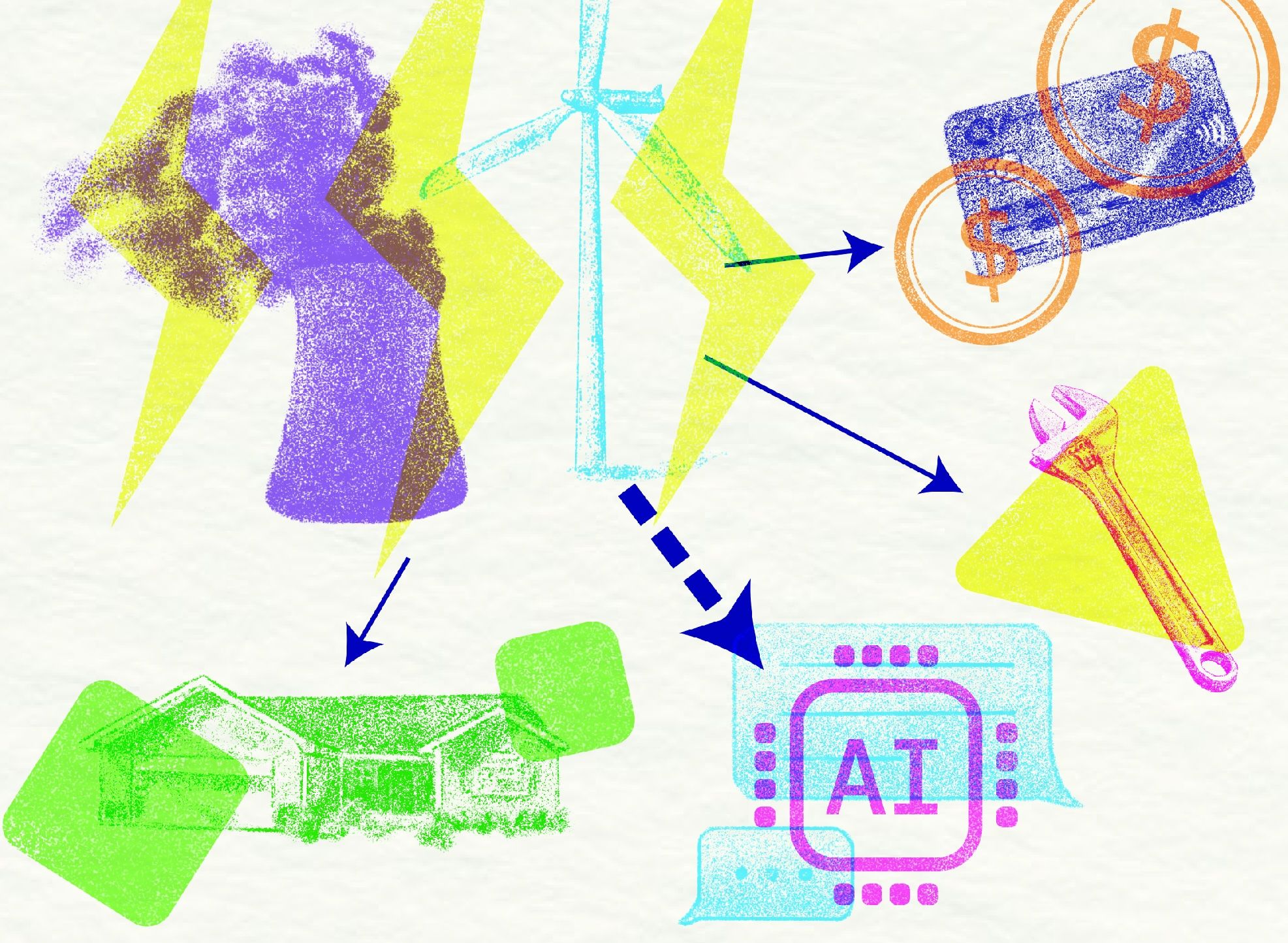
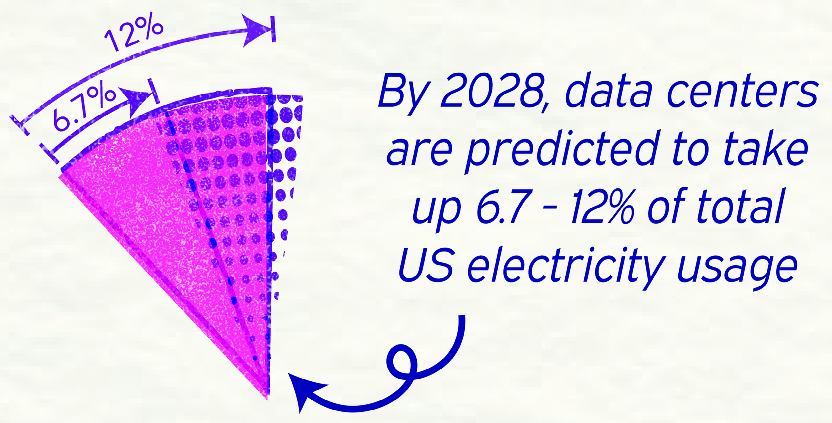
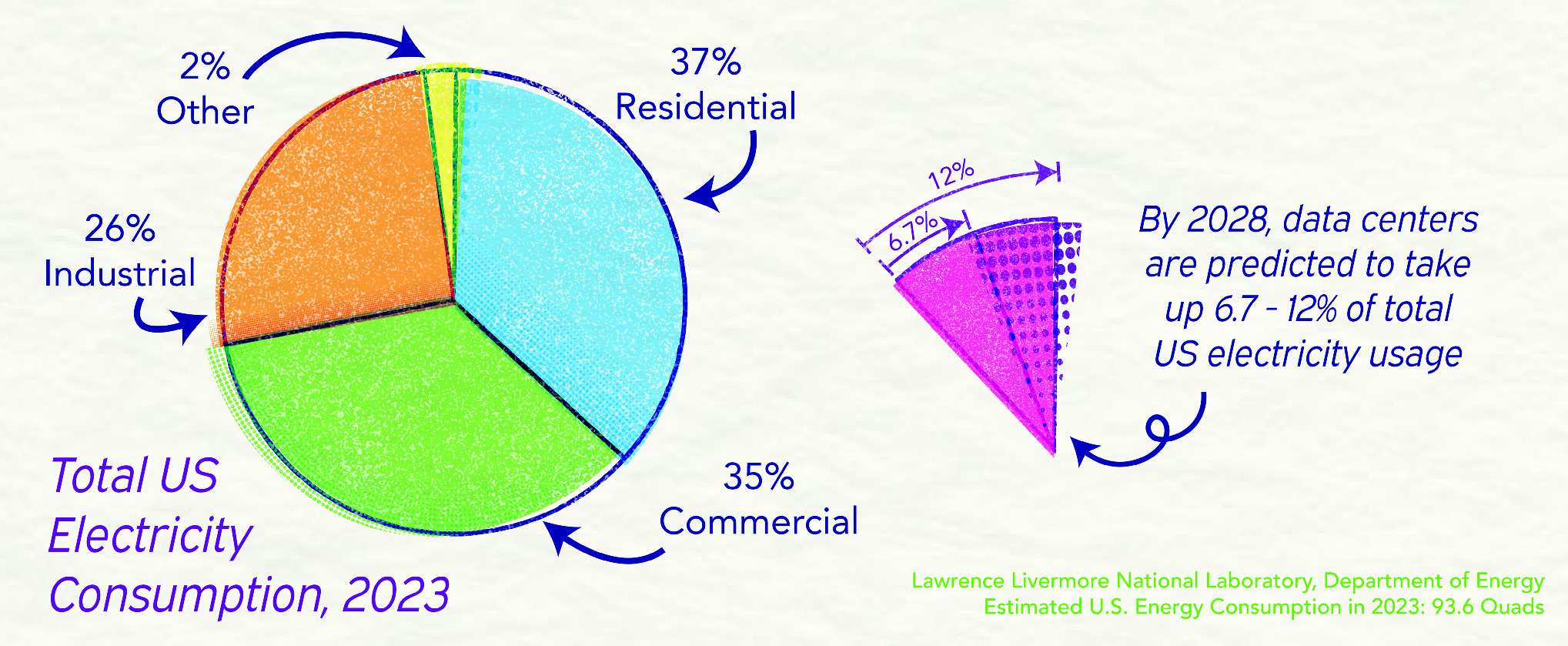
In 2024, researchers at Lawrence Berkeley National Laboratory (LBL) released a report detailing the energy use of US data centers up to 2023. They found that electricity demand from AI data centers is accelerating rapidly, with usage predicted to nearly double or more than triple by 2028. As electricity demand increases, water demand and carbon emissions are likely to follow suit. These increases are not only an environmental concern, but also a potential financial strain and public health risk to local communities where data centers are built. The immense stress put on local power grids can cause utility companies to push increased costs onto everyday consumers or increase the risk of blackouts. AI companies may also choose to generate their own electricity using on-site gas turbines that release strong air pollutants. These problems have already harmed many and will only continue unless there is intervention.
Whatever your stance on AI, the report from the LBL makes clear that the current trajectory of the AI industry’s power demands is unsustainable and must be addressed. Collaborations with utility providers could increase accountability from AI companies by holding them liable for increased prices or requiring them to invest in clean and renewable energy. Government regulation can also address potential harm by requiring such contracts and strictly enforcing public health requirements. Additionally, the electricity demand of AI can be reduced through technological developments like improved algorithms or physical changes in the computational infrastructure such as optical computing. It is important to remember that these avenues exist and to advocate for their development and implementation, rather than accept the harm that accompanies AI as inevitable.
This article is part of the Spring 2026 issue.